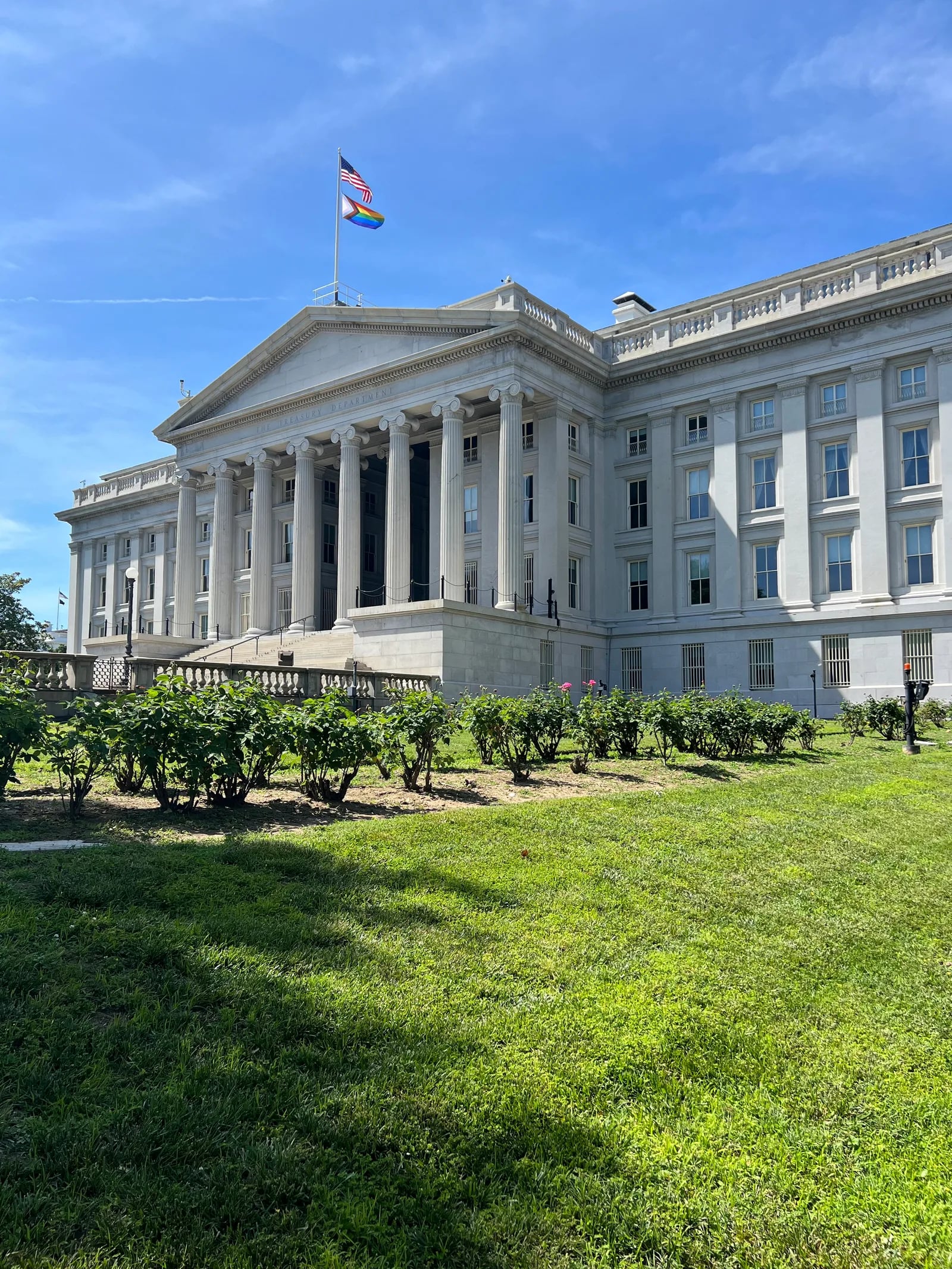
Financing the AI build-out has entered a more expensive phase. This week the US 10-year Treasury yield sat near 5.17 percent, its highest level since 2007 and about one percentage point above where it started the year, CNBC reported on 27 September. For companies funding data centres mainly with borrowed money, that level sets the reference price for every new bond and loan they price.
The size of the sums involved is why the move matters beyond the handful of issuers concerned. JPMorgan Chase estimated in June that $4.1 trillion of AI-related debt will be issued through 2030, as data centre operators and companies tied to the artificial intelligence boom race to add capacity. Goldman Sachs expects Alphabet, Amazon, Meta, Microsoft and Oracle to spend roughly $800 billion on capital expenditure this year and about $1.2 trillion in 2027.
Those plans already show up in aggregate borrowing. US companies issued about $1.9 trillion of bonds through August, 30 percent more than in the same period of 2025, according to SIFMA data. Global bond issuance by AI-linked companies has passed $400 billion this year and is running at an annualised pace above $500 billion, with US issuers accounting for roughly 90 percent of the total, according to a quarterly report from the Institute of International Finance.
The cost of that debt is rising in visible ways. SoftBank, one of the principal providers of capital to AI projects, raised $11.1 billion in a junk-bond sale this week, with yields reaching 9.75 percent on the seven-year tranche, CNBC reported. CoreWeave, the debt-heavy "neocloud" that rents out GPU capacity, spells out its sensitivity in its own SEC filing: in its quarterly report for the period ended 30 June 2026, the company said that for every 100-basis-point change in interest rates its interest expense could rise or fall by approximately $30 million over three months and $61 million over six months, based on the balance of its floating-rate debt. Its net interest expense reached $640 million in the second quarter of 2026, against $267 million a year earlier.
Equity investors are not treating all borrowers alike. CoreWeave shares rose almost 8 percent over the week, while Oracle, which has leaned on the bond market for its AI expansion, fell 7 percent and is down about 30 percent this year. Oracle also drew attention after Bloomberg reported it had sent a force majeure notice tied to its New Mexico data centre campus, a move aimed at protecting it from higher expenses if the project, called Project Jupiter, does not come online as expected in 2028. Oracle said the project "remains on our planned schedule".
Lenders are becoming more selective. Riley Thompson, a vice president at Mitsubishi HC Capital America, told CNBC that even borrowers willing to pay more are finding fewer takers: "Instead of a roster of 50 neoclouds, there's probably 20 that the market's truly interested in." A senior private credit investor, speaking on condition of anonymity, said neocloud deals will be harder to finance because those companies have less cushion to absorb higher costs. KBRA's Andrew Giudici said he still expects large issuance to continue.
The contested part is how far this spills into the wider bond market. Federal Reserve Chairman Kevin Warsh said in September that hyperscalers "are out in the market raising funding" and that competition for capital "partly explains the increase in yields". Research published so far is more cautious. Pimco said it found no statistically significant increase in 10-year Treasury yields around the six largest recent AI debt offerings. Morgan Stanley's head of US credit strategy, Vishwas Patkar, noted during an IIF briefing that AI-related bonds are mainly longer-dated while Treasury issuance has shifted toward shorter maturities, and that the two categories tend to attract different buyers. The IIF found the share of global issuance from nonfinancial companies broadly stable.
What the data does not establish is a simple causal chain from AI borrowing to Treasury yields. A 10-year yield near 5.2 percent is a market level that moves daily, and the capex figures are expectations rather than commitments. Patkar's framing is narrower: the relevant variable is less the volume of AI corporate issuance than what the borrowing represents, an investment boom that supports growth and the demand for capital at a time when the US personal savings rate is near a four-year low. For issuers the practical consequence is already clear: the same build-out now costs more to finance, and the marginal borrower with floating-rate debt and no investment-grade rating feels it first.
Sources