The number that determines what Europeans pay for heating, cooking and electricity generation is not set in Brussels, Berlin or Paris. It comes from a virtual trading point in the Netherlands called the Title Transfer Facility — TTF — where natural gas changes hands on paper without ever moving through a physical pipeline. On 11 September 2026, TTF stood at 80.32 euros per megawatt hour (EUR/MWh), a level not seen since 2023, according to Trading Economics. Understanding how this bookkeeping mechanism works — and why disruptions thousands of kilometres away can move it overnight — is essential for anyone trying to make sense of European energy costs.
What TTF Is (and What It Is Not)
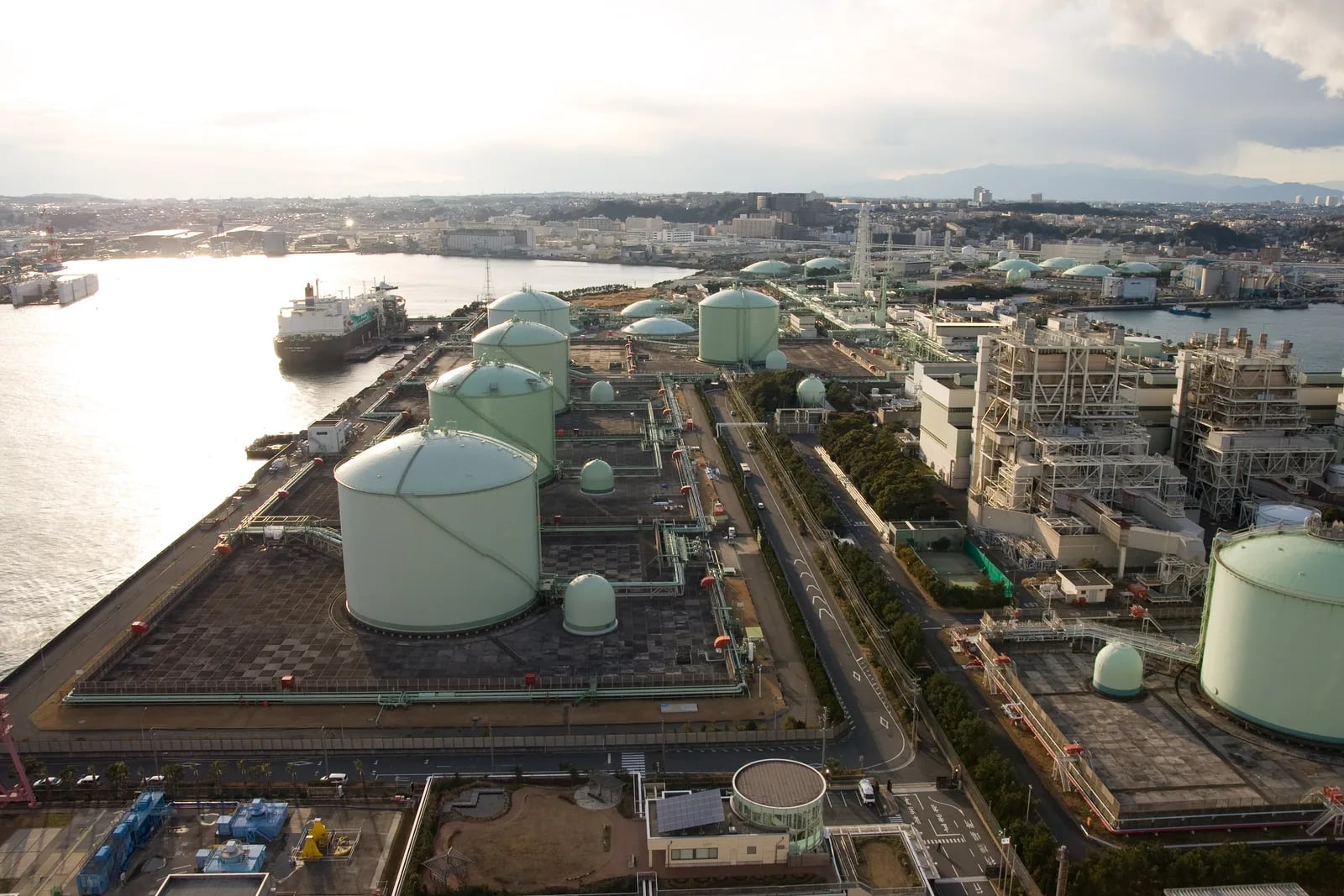
The TTF is not a pipeline, a terminal or a storage facility. It is a virtual transfer point within the Dutch national gas transport network, operated by Gasunie Transport Services (GTS), a subsidiary of the state-controlled energy company Gasunie. Created in 2003, it was designed as a bookkeeping hub where parties that have already brought gas into the Dutch grid — through entry points such as LNG terminals at Gate (Rotterdam) and EemsEnergy (Eemshaven), or pipeline connections from Norway, the United Kingdom and Germany — can transfer ownership to another party without physically moving the molecules.
In practice, a utility company that imported LNG through the Gate terminal in Rotterdam can sell that gas to a German distributor through a TTF trade. The gas remains where it is in the pipeline network; only the ownership record changes. Gasunie registers these transfers through electronic messages called nominations. The price at which these transfers occur — quoted in EUR/MWh — is the TTF price.
This virtual design is not unique. The United Kingdom has its own version, the National Balancing Point (NBP), and Germany operates the Trading Hub Europe (THE). But TTF has become dominant because of where the Netherlands sits geographically: at the crossroads of pipelines connecting Scandinavia, the North Sea, Central Europe and the Mediterranean, and home to two of Europe's largest LNG import terminals. This convergence of supply routes created the deepest liquidity pool on the continent, and liquidity attracts more liquidity. Wholesale gas trading at TTF now exceeds domestic Dutch consumption by a factor of fourteen, according to Wikipedia data on the facility.
Why One Hub Sets Prices for 27 Countries
The link between TTF and gas prices across Europe operates through two mechanisms: indexation and arbitrage.
First, indexation. Many long-term gas supply contracts in Europe are indexed to TTF. A pipeline operator delivering gas from Norway to Germany, or an LNG supplier bringing cargoes to France, may price their contracts as "TTF minus a discount" or "TTF plus a premium." This means the TTF price directly determines the cost of gas for utilities, industries and, ultimately, households — even in countries where very little gas physically flows through the Dutch network.
Second, arbitrage. Even where contracts are not directly indexed to TTF, market forces push prices toward convergence. If gas is cheaper in Germany (THE) than in the Netherlands (TTF), traders will buy in Germany and sell in the Netherlands until the price gap closes — minus transportation costs. This is why THE (Germany), PEG (France) and PSV (Italy) tend to track TTF closely, with only small spreads reflecting pipeline tolls and local conditions. ICE, which operates the TTF futures exchange, describes TTF as the "pricing reference point for the wider European" gas hubs.
The practical consequence is that a single number — the TTF front-month futures price — ripples through the entire continent. When TTF rises, it pushes up the cost of gas for power generators (which sets electricity prices), for industrial users (chemicals, steel, glass) and for household energy bills. The UK's energy regulator Ofgem, for example, set its price cap at £1,723 per year from October 2026, with the gas component rising 8% — a direct reflection of TTF movements, as reported by Global Oil Shock.
The LNG Bridge: Why Middle East News Moves European Gas
The most powerful — and most misunderstood — transmission mechanism is liquefied natural gas (LNG). Europe's gas supply depends on two physical channels: pipelines (from Norway, Algeria, Azerbaijan and, historically, Russia) and LNG imports. After Russia's pipeline deliveries collapsed following the 2022 invasion of Ukraine, Europe became far more dependent on LNG, which now accounts for roughly a quarter of the continent's gas supply.
LNG is a globally traded commodity. A cargo of liquefied gas loaded in Qatar, the United States or Australia can be redirected mid-voyage to whichever market offers the highest price. This creates an arbitrage link between TTF and Asian LNG spot prices — specifically the Japan Korea Marker (JKM), which ICE also trades. When Asian demand rises, or when supply is disrupted in the Middle East, the price of LNG in Asia goes up. At that point, LNG cargoes that would normally head to European terminals are diverted to Asian buyers who will pay more. Europe's supply tightens. TTF rises.
This is precisely what happened in 2026. TTF was trading above 65 EUR/MWh by 20 August — up 130% since the start of the year, according to Euronews — driven by a combination of low storage levels, strong Asian LNG demand, and supply concerns linked to Middle East tensions. By 9 September, Bloomberg reported TTF crossing 80 EUR/MWh for the first time since 2023. The trigger was not a European event; it was the global LNG market redistributing cargoes.
Storage amplifies this dynamic. European gas storage stood at just 57.1% full on 1 August 2026, a record low for that date, according to Euronews. By 8 September, it had risen to 67.12% — still the weakest level for that time of year since 2009, according to Wood Mackenzie data cited by Rigzone. When storage is low going into winter, there is less buffer to absorb supply disruptions, and the market prices in a risk premium. Analyst forecasts for winter 2026-27 diverge sharply: Oxford Economics projects around 60 EUR/MWh, while CNBC has cited scenarios above 100 EUR/MWh.
What This Means
The TTF is a mechanism, not a market in the traditional sense. It does not produce gas, store it or transport it. It discovers a price — and that price, through indexation, arbitrage and the global LNG market, determines energy costs across a continent. For anyone trying to understand why a pipeline shutdown in Saudi Arabia, a cold winter in China or a storage shortfall in Germany all end up affecting the same number on the same screen, the answer flows through a virtual point in the Dutch gas network.
Sources
1. Gasunie Transport Services, "TTF" — gasunietransportservices.nl 2. ICE, "Title Transfer Facility (TTF)" — ice.com 3. Global Oil Shock, "TTF Gas Price Explained: Europe's Benchmark 2026" — globaloilshock.com 4. Wikipedia, "Title Transfer Facility" — en.wikipedia.org 5. Trading Economics, TTF quotations — tradingeconomics.com 6. Euronews, "Asia LNG Demand Rebound & European Gas Prices 2026" — discoveryalert.com 7. Rigzone / Wood Mackenzie, EU gas storage data — energyprices.net