Novo Nordisk shares fell nearly 8 percent on Monday after the Danish drugmaker laid out a post-Wegovy growth strategy at its Capital Markets Day in London that fell short of investor expectations, with the key disappointment being a revenue growth outlook described as "in line with industry peers."
The American depositary receipts closed at $39.73 on the New York Stock Exchange, down from $43.24 at Friday's close. The single-day decline of more than 8 percent was among the steepest in the stock's recent history, and the ADR is now down roughly 72 percent from its 52-week high of $139.74 reached in August 2024.
CEO Maziar Mike Doustdar told investors the company aims to launch more than five drugs with multi-blockbuster potential by 2030 and generate more than 150 billion Danish kroner (approximately $23 billion) in annual sales from its pipeline by 2035. The targets include at least five Phase 3 programs in obesity and diabetes and at least five in other therapeutic areas, with manufacturing capacity scaled to serve ten times more patients on oral GLP-1 treatments. Novo Nordisk also pledged to reach more than 60 million patients globally by 2030 while maintaining a broadly stable operating margin and an attractive dividend per share.
The "peer average" problem
The line that rattled markets was the 2026-2030 revenue compound annual growth rate guidance: "in line with industry peers." For a company that until recently traded at a significant premium to pharma benchmarks on the strength of its dominant position in the GLP-1 obesity and diabetes market, describing future growth as average was a clear signal that the era of exceptional outperformance may be ending.
"A company guiding to the average is no longer being valued as an outlier, and the multiple compresses accordingly," 24/7 Wall Street noted in its analysis of the selloff.
The compression is driven in large part by the looming semaglutide patent cliff. Doustdar acknowledged that the U.S. patent expiry in 2032 threatens the active ingredient behind Wegovy and Ozempic, products that accounted for more than half of Novo Nordisk's overall sales last year. "Novo Nordisk created an incredibly attractive market," Doustdar said, adding that "almost every other pharmaceutical company, big or small, is now trying to compete in it."
Lilly's shadow and the CagriSema question
The competitive backdrop underscores the challenge. BMO Capital Markets noted in a Monday research note that it "continues to give Eli Lilly the edge in the cardiometabolic market as the American rival's tirzepatide franchise continues to take market share from Novo's Ozempic and Wegovy."
Against this backdrop, Novo Nordisk presented new Phase 3 data for CagriSema, a combination of cagrilintide and semaglutide positioned as the next-generation injectable obesity treatment. In the REIMAGINE 5 study, a 1.0 mg/1.0 mg dose of CagriSema achieved 12.4 percent weight loss at 60 weeks versus 9.1 percent for Eli Lilly's tirzepatide in adults with type 2 diabetes. However, BMO cautioned that the results, while "encouraging for CagriSema positioning in diabetes," remain "more distant" from approval, and that tirzepatide has already been proven superior at higher CagriSema doses in obesity.
A separate trial, REDEFINE 9, showed 21 percent weight loss at week 68 in adults with overweight or obesity, adding to the clinical case for the combination therapy. FDA approval for CagriSema in type 2 diabetes depends on REDEFINE 3 outcomes data expected in the second half of 2027, positioning a potential launch in 2028, according to BMO.
Beyond the headline numbers
The pipeline strategy also extends beyond obesity and diabetes into blood disorders, endocrine diseases, liver conditions and cardiovascular disease, a diversification that reverses the sharpening of focus Doustdar pursued after taking over as CEO. Novo Nordisk said it will be "more active within business development" to fill scientific and strategic gaps, though the company stressed it would remain "selective" and "disciplined" in dealmaking.
The Wegovy pill, launched in the U.S. in January 2026, has reached seven million prescriptions, described by Doustdar as the best U.S. product launch by volume in the company's history. But even that achievement was not enough to offset concerns that Novo Nordisk is preparing for a slower-growth future rather than extending the dominance it built with Ozempic and Wegovy.
The company also disclosed setbacks for its cardiovascular ambitions: the Phase 3 Zeus trial of ziltivekimab failed unexpectedly in July, and two additional late-stage studies for the IL-6 inhibitor were discontinued earlier this month.
Market reaction
The selloff was distinctly Novo Nordisk-specific. Eli Lilly shares barely moved, ruling out a broader repricing of the obesity drug sector. Viking Therapeutics edged higher, benefiting from a rotation toward smaller, next-generation obesity pipeline candidates as capital moved away from the incumbent under pressure.
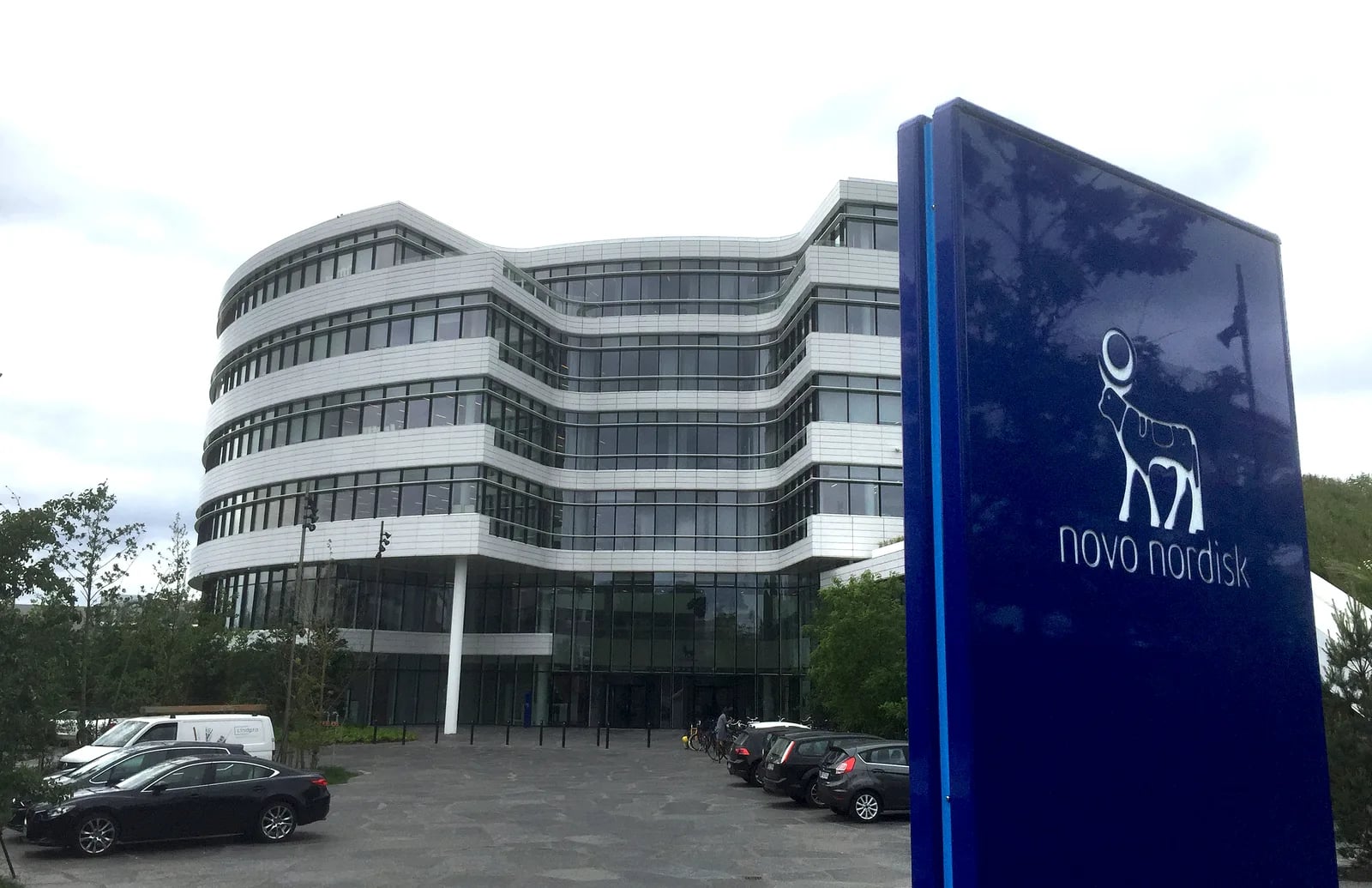
Novo Nordisk also recently rebranded, dropping "Nordisk" from its name and reorienting its iconic Apis bull logo to face right as a symbol of its forward-looking mission. Monday's market verdict suggested investors are not yet convinced the new direction will deliver returns matching the company's extraordinary run.
Sources
- Novo Nordisk, Capital Markets Day 2026 press release, September 21, 2026 (novonordisk.com)
- 24/7 Wall Street, "Novo Nordisk Falls 7% as Post-Wegovy Growth Plan Fails to Ease Competition Fears," September 21, 2026 (247wallst.com)
- BioSpace, "Novo's plan to hit $23B in revenue by 2035 leaves investors wanting," September 21, 2026 (biospace.com)