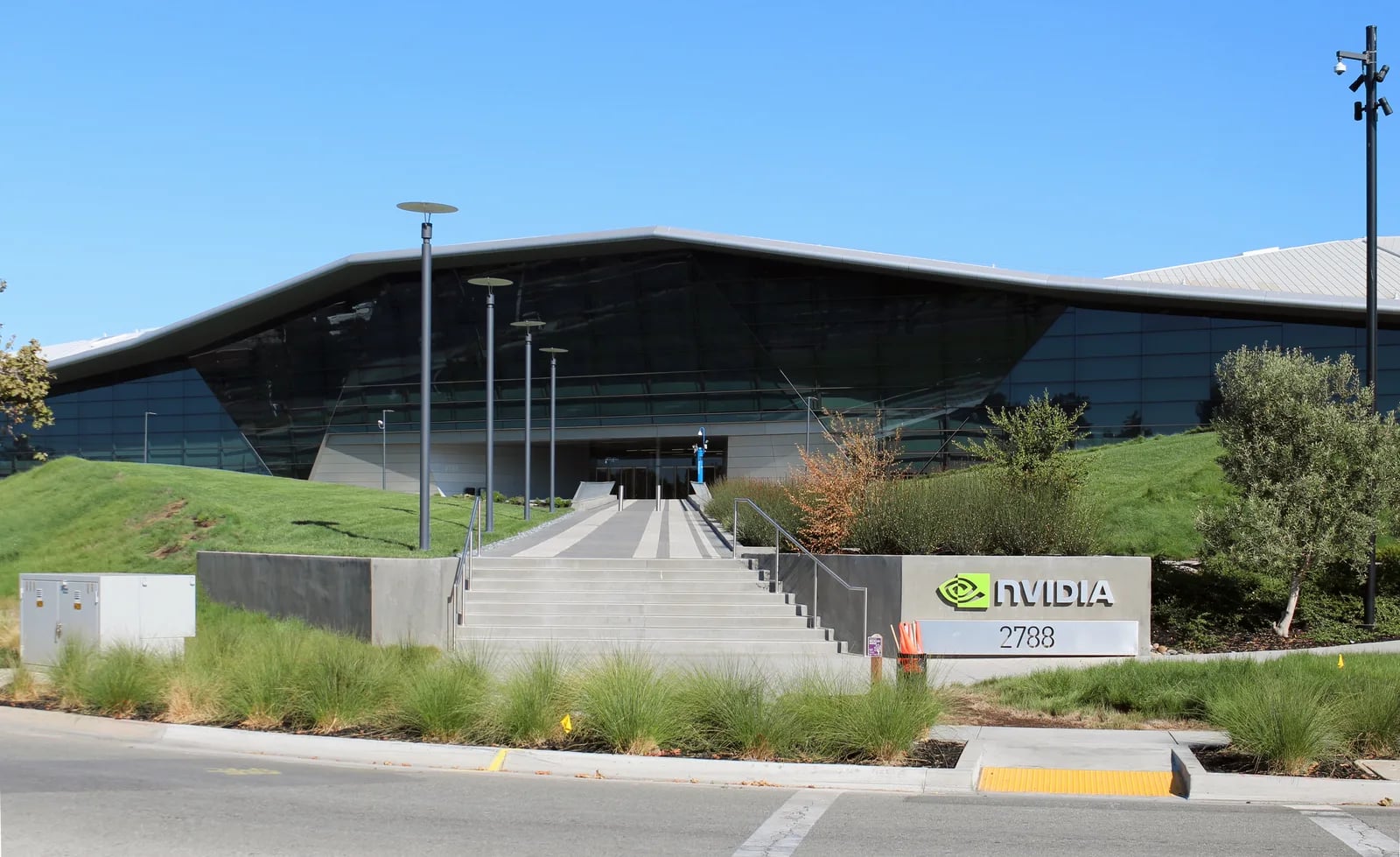
Nvidia's board of directors has authorized a $150 billion increase to the company's share repurchase program, lifting the total remaining amount available to buy its own stock on the market to $235 billion. The announcement came on Monday, September 28, and Nvidia expects to use the full program through fiscal year 2028. The company itself calls it the largest share repurchase authorization increase in history: the previous record was Apple's $110 billion plan from May 2024, and the move comes four months after the board added $80 billion to the program, as Quartz recalls.
Founder and chief executive Jensen Huang tied the decision to cash generation. Nvidia's growth, he said, is being driven by a once-in-a-generation platform shift to artificial intelligence and accelerated computing, and the cash the company produces gives it the means to invest in the technologies that advance that shift while also returning capital to shareholders. Huang told CNBC he sees the current build-out as the largest infrastructure construction in human history and added that the company will generate a lot of cash in coming years and wants to return part of it to shareholders year after year. The authorization, the press release says, reflects the group's confidence in the long-term opportunity ahead.
Understanding what actually changes starts with the mechanics. In a buyback a company spends its own cash to purchase its shares on the market: the number of shares outstanding falls and every remaining share represents a larger slice of earnings, so earnings per share rise even without higher profits. The decisive point, though, is that an authorization is not a purchase: the board sets the ceiling, not the calendar. Nvidia buys at the pace it considers appropriate based on the share price, available cash and its investment plans, and the completion date the company points to is a forecast, not a spending commitment.
The cash comes from the past quarter's numbers, for the period ended July 26. Nvidia reported record revenue of $96.2 billion, up 18 percent from the previous quarter and 106 percent from a year earlier; data center revenue alone reached $89.0 billion, up 117 percent. Gross margin was 75 percent, net income $59.7 billion and diluted earnings per share $2.46. During the quarter the company returned about $26 billion to shareholders through repurchases and dividends, and roughly $99 billion of authorization remained at the end of July: comparing the two figures Nvidia published implies that about $14 billion of the earlier capacity was used between August and late September. Cash and equivalents stood at $22.44 billion at the end of July, and the quarterly dividend of $0.25 per share is paid on October 1.
The market reaction was positive but far from violent. According to Il Sole 24 Ore the stock gained 0.8 percent in pre-market trading and rose as much as 1.8 percent after the news; in New York it closed the session up 2.8 percent, with a market capitalization of about $5.42 trillion, the highest of any company worldwide, according to CNBC. Over twelve months the gain is 24 percent, and since the start of the year it was above 20 percent at Friday's close. The most interesting part is valuation: Yahoo Finance calculates that the stock trades at 24 times forward twelve-month earnings against 20 times for the S&P 500, a multiple that has been falling steadily since August 2024 despite a run of very solid quarters. That, Yahoo Finance argues, is why Huang sees this as a good moment to buy back his own shares at attractive prices.
The old tension remains: the same cash can go back to shareholders or into new plants and new technology. Nvidia is not choosing exclusively. According to Quartz, the company said it intends to return excess free cash flow through repurchases and a dividend it expects to grow; at the same time it keeps investing in the artificial intelligence ecosystem, holding stakes in 13 listed and 229 private companies, with realised exits delivering more than three times the original investment, and long-term data center lease agreements worth about $20 billion that it plans to hand off to other companies. The scale of the phenomenon shows in the wider spending picture: S&P Global Ratings estimates combined hyperscaler capital expenditure will exceed $1.3 trillion by 2027, CNBC recalls. One doubt part of the market keeps cultivating, highlighted by Il Sole 24 Ore, is that Nvidia's funding of startups and cloud providers ends up indirectly supporting demand for its own chips.
The point, then, is not only how much Nvidia will spend. A $235 billion authorization tells the market three things: that the board considers the stock undervalued, that cash generation is judged sustainable at least through fiscal 2028, a year for which the company projects revenue growth of about 70 percent, and that infrastructure remains the priority, with returns to shareholders as a consequence of plenty rather than an alternative to investment. Two variables are worth watching: how many shares Nvidia actually repurchases, because an authorization is not a purchase, and whether competition in AI chips starts eroding prices. Until then, the $235 billion ceiling says more about how the company sees its own future than about what it will spend next quarter.
Sources