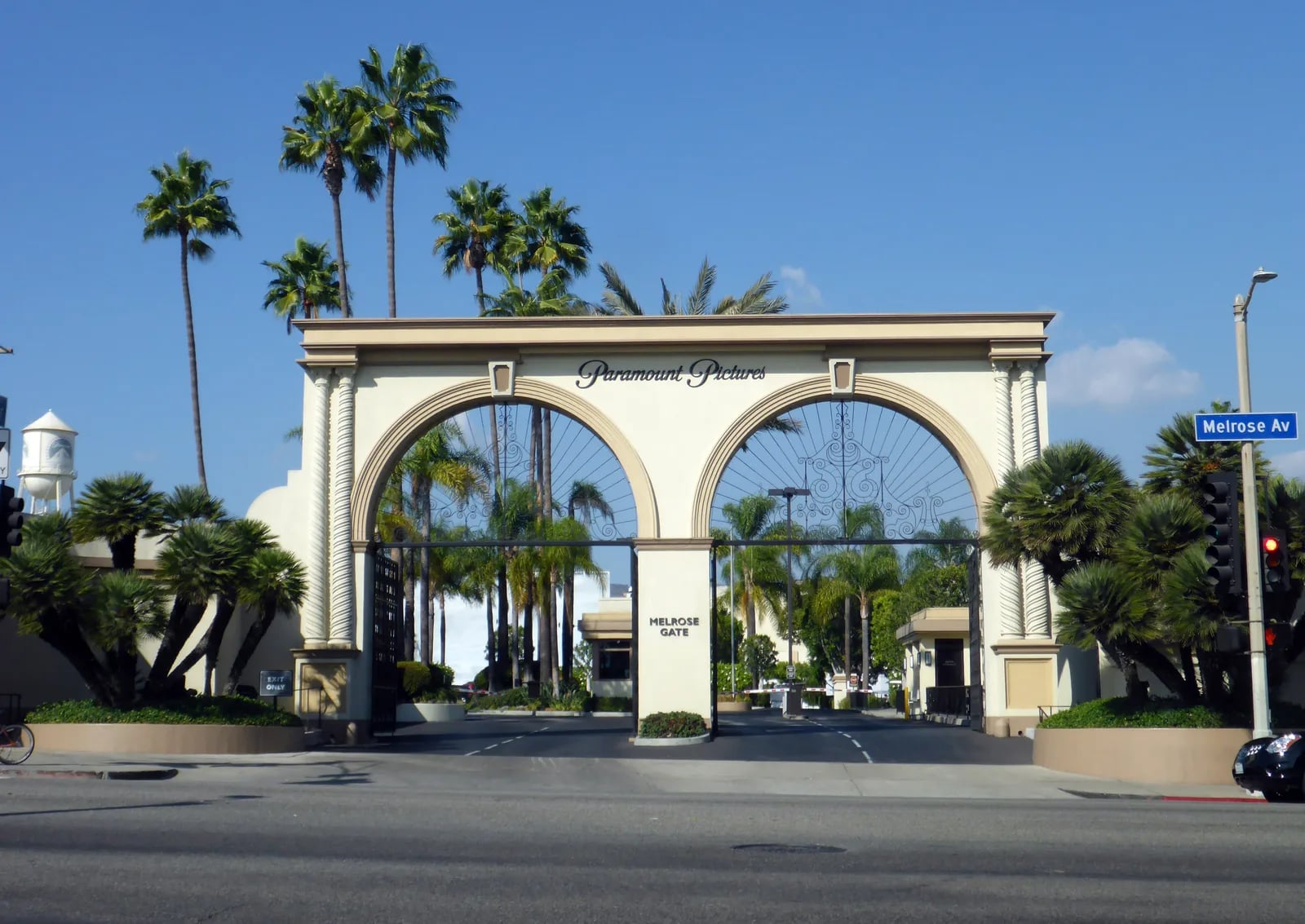
Paramount Skydance has settled the antitrust lawsuit brought by a coalition of 12 state attorneys general over its $110 billion merger with Warner Bros Discovery, California Attorney General Rob Bonta's office announced on 21 September. The agreement, which still needs court approval, removes what the states had treated as the main legal obstacle to a transaction that would combine two legacy studios, two streaming platforms and two national news organisations under Paramount chair and chief executive David Ellison.
The states sued on 13 July, arguing in a 38-page complaint that the deal would "extinguish competition" in three markets: wide-release theatrical film distribution, anticipated top-grossing movie distribution, and the distribution of basic cable channels to cable and satellite providers. They invoked Section 7 of the Clayton Antitrust Act of 1914. Paramount rejected the claims at the time, calling the case "one of the weakest merger challenges in modern antitrust history" and "wrong on both the facts and the law".
Under the settlement terms, the merged company commits for five years to release at least 30 films a year, including 20 wide releases, in the first two years, and 32 films a year, with 21 wide releases, in years three to five. At least four films a year must be independent productions. If the output target is missed in any year, the company must divest Miramax Studios and pay $30 million for every missed film into the healthcare and retirement trust funds of the Writers Guild of America, IATSE, the Directors Guild of America and the International Brotherhood of Teamsters, and to the National Association of Attorneys General for further antitrust enforcement.
On domestic production, Paramount commits to spend at least an additional $1.5 billion over five years above its 2025 US spending levels. Bonta's office described that figure as a baseline. Around 5 percent of Paramount's production is currently in the United States; the US share must rise to 20 percent of all film production in the first two years and to at least 30 percent in the remaining three if a federal film tax credit of at least 20 percent is enacted. If an expanded state film tax credit is also passed in California or New York, US production would have to reach at least 40 percent of the total.
The agreement adds an Independent Film Fund, with annual contributions of $5 million for five years, for the purchase of independent films; a Workforce Fund of $47.5 million over five years for training and career development for workers displaced by the merger; a requirement to honour existing collective bargaining agreements and bargain in good faith; and, for five years, negotiations for Paramount basic cable channels conducted separately from those for Warner Bros basic cable channels. The combined company must keep offering a free streaming service such as Pluto TV. It must also set up a News Editorial Independence Board for CNN and CBS within 180 days of completion, with five acting or retired journalists of at least a decade's experience, and accept an independent monitor to oversee compliance.
The state case is one of several regulatory steps. The US Justice Department approved the deal on 12 June and the European Commission cleared it on 21 July, requiring divestment of a stake in United International Pictures and a ten-year bar on film distribution deals with Universal in the European Economic Area. Paramount had agreed to freeze the merger until the antitrust challenge was resolved or 1 June 2027, whichever came first; a trial had been scheduled for early March before Judge Araceli Martinez-Olguin of the US District Court for the Northern District of California. The company also faces a "ticking fee" of 25 cents a share per quarter owed to Warner shareholders if the transaction has not closed by 30 September, a penalty NBC News put at more than $600 million every three months.
Shares of both Paramount and Warner Bros Discovery rose more than 10 percent as reports of the settlement circulated, NBC News reported. The Writers Guild of America said the same day that it had settled its own lawsuit against Paramount: $17.5 million into its health fund, legal fees covered, and a bar on writer layoffs at CBS News Broadcast for five years. SAG-AFTRA said the terms address "some of our deep concerns about production levels and investment in U.S. production", while the WGA said it still believes the deal "will cause damage to writers and the industry at large".
What the settlement does not establish is that the merger is lawful or that it will now close. Approval by the court is still pending, and Bonta was explicit that the agreement "is not a vote of support for this merger". The production percentages are contingent on tax credits that have not been enacted; Bonta said he will work with the California legislature to uncap the state's film and television tax credit. His earlier stated expectation that the merged company would keep its headquarters in California is not part of the agreement, he acknowledged, saying "it's not part of the deal". And because the $1.5 billion is an increment over a 2025 baseline that the announcement does not quantify, the absolute level of the combined company's US production spending cannot be read off the document.
Sources
- California Attorney General, "Attorney General Bonta Announces Settlement in Warner Bros./Paramount Litigation", press release, 21 September 2026: oag.ca.gov
- BBC, "Paramount settles lawsuit with US states, clearing way for $110bn merger with Warner Bros": bbc.com
- NBC News, "Paramount reaches deal with states over $110B Warner merger": nbcnews.com