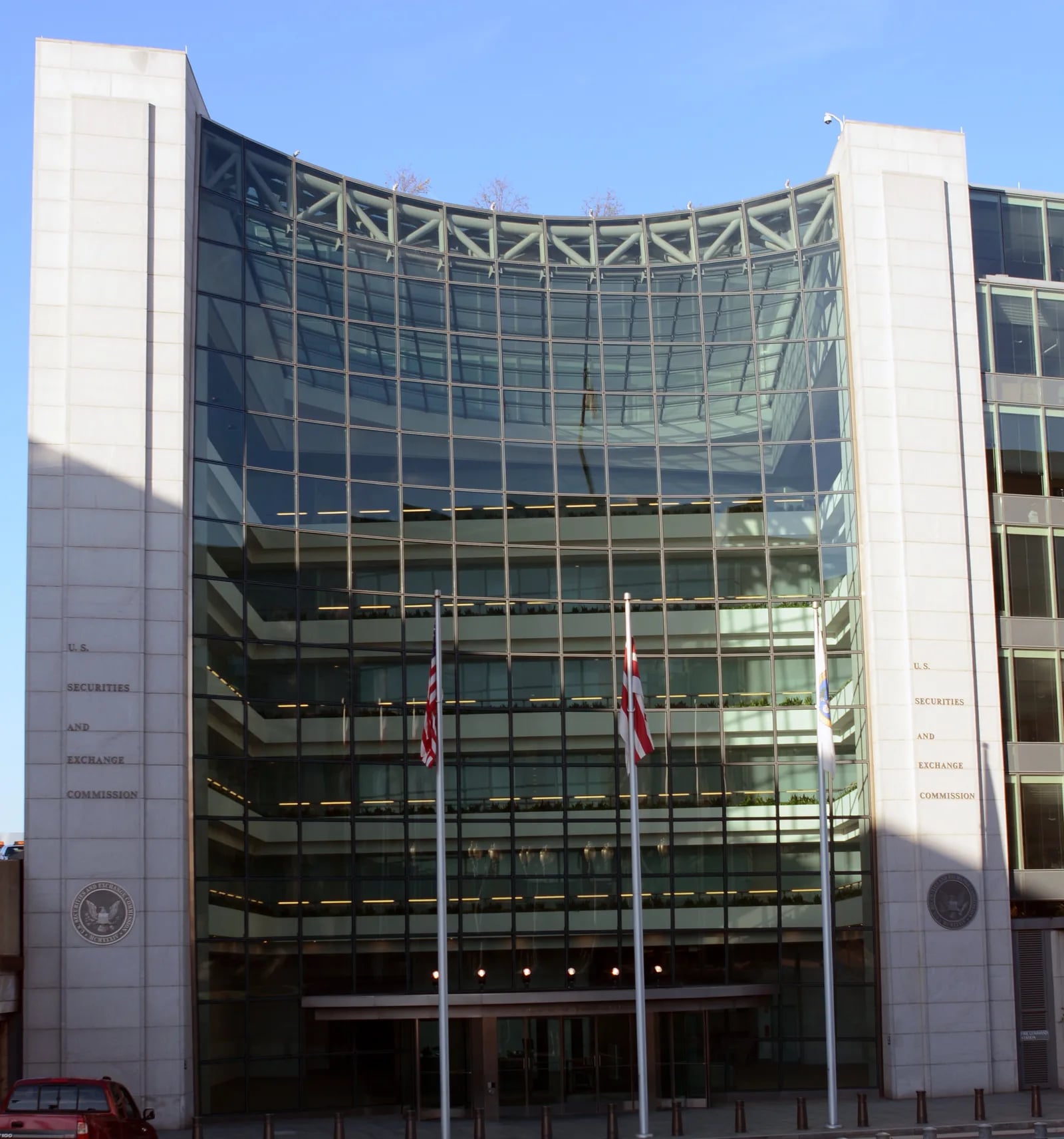
The U.S. Securities and Exchange Commission on September 17, 2026, issued a landmark conditional exemption that will allow blockchain-based venues to trade tokenized versions of listed American stocks without registering as a national securities exchange. The two-part order, which took effect immediately, grants five-year relief to what the SEC calls Tokenized Securities Venues, or TSVs, for trading tokenized National Market System stock through automated market makers and liquidity pools.
Under the exemption, a TSV can operate permissioned blockchain-based liquidity pools where tokenized shares of eligible U.S. stocks are bought and sold. The venues must restrict access to credentialled participants — through wallet allow-lists or similar onchain verification — and must deploy auditable, open-source smart contracts on a public, permissionless distributed ledger. The order does not cover fully decentralized protocols that lack an identifiable operator.
The exemption comes with a tiered cap on the number of securities and trading volume each venue may handle. Tier 1 covers S&P 500 and Russell 1000 constituents and certain exchange-traded products with consolidated average daily volume above 2 million dollars. A TSV may list up to 75 Tier 1 symbols, but cannot exceed 0.25 percent of the consolidated average daily volume in any single stock. Tier 2 encompasses all other NMS stocks excluding rights and warrants, with a ceiling of 250 symbols and a volume cap of 2.5 percent. A first breach of the volume limit triggers no penalty, but each subsequent breach requires the TSV to pause trading in that stock for three months.
Importantly, issuers of publicly traded companies retain a veto over third-party tokenization. Before listing a tokenized version of a company's stock created by an unaffiliated party, the TSV must give the issuer at least 30 calendar days' written notice. If the issuer objects within that window, the TSV cannot offer the token. The SEC also requires that tokenized shares confer the same economic and governance rights as the underlying stock — including equivalent dividend, voting, and liquidation rights.
The exemption simultaneously addresses the regulatory uncertainty facing firms that provide liquidity to automated market makers. A separate Covered Firm exemption relieves liquidity providers who supply capital in the form of tokenized NMS stock from the need to register as dealers under the Exchange Act. Covered Firms must operate solely for their own accounts, maintain records of their liquidity provision activities, and disclose their non-registered status and any compensation received from the TSV.
The order explicitly excludes several categories of activity. Synthetic stock structures — such as equity-linked debt or derivatives that provide exposure to an underlying security rather than direct ownership — are not eligible. TSVs may not engage in margin lending, borrowing, or hypothecation of assets on the platform. They must halt trading whenever the primary listing exchange pauses trading in the underlying stock, and they must notify participants immediately.
The SEC is requesting public comment on all aspects of the Innovation Exemption. The move arrives just two days after the CLARITY Act, a broader piece of crypto legislation, failed to advance in the U.S. Senate. In a statement, SEC Commissioner Hester Peirce stressed that the order is not about decentralized finance, noting that truly decentralized systems driven by automated software do not give rise to the foundational concerns underlying securities regulation. Acting Chair Mark Uyeda described the initiative as a modest start to measure the effect of blockchain technology on securities markets.
Sources
1. Sullivan & Cromwell, SEC Issues Innovation Exemption for Tokenized Securities, September 18, 2026 (sullcrom.com) 2. SEC Press Release, SEC Issues Innovation Exemption to Facilitate the Trading of Tokenized NMS Stock and Request for Comment, September 17, 2026 (sec.gov)