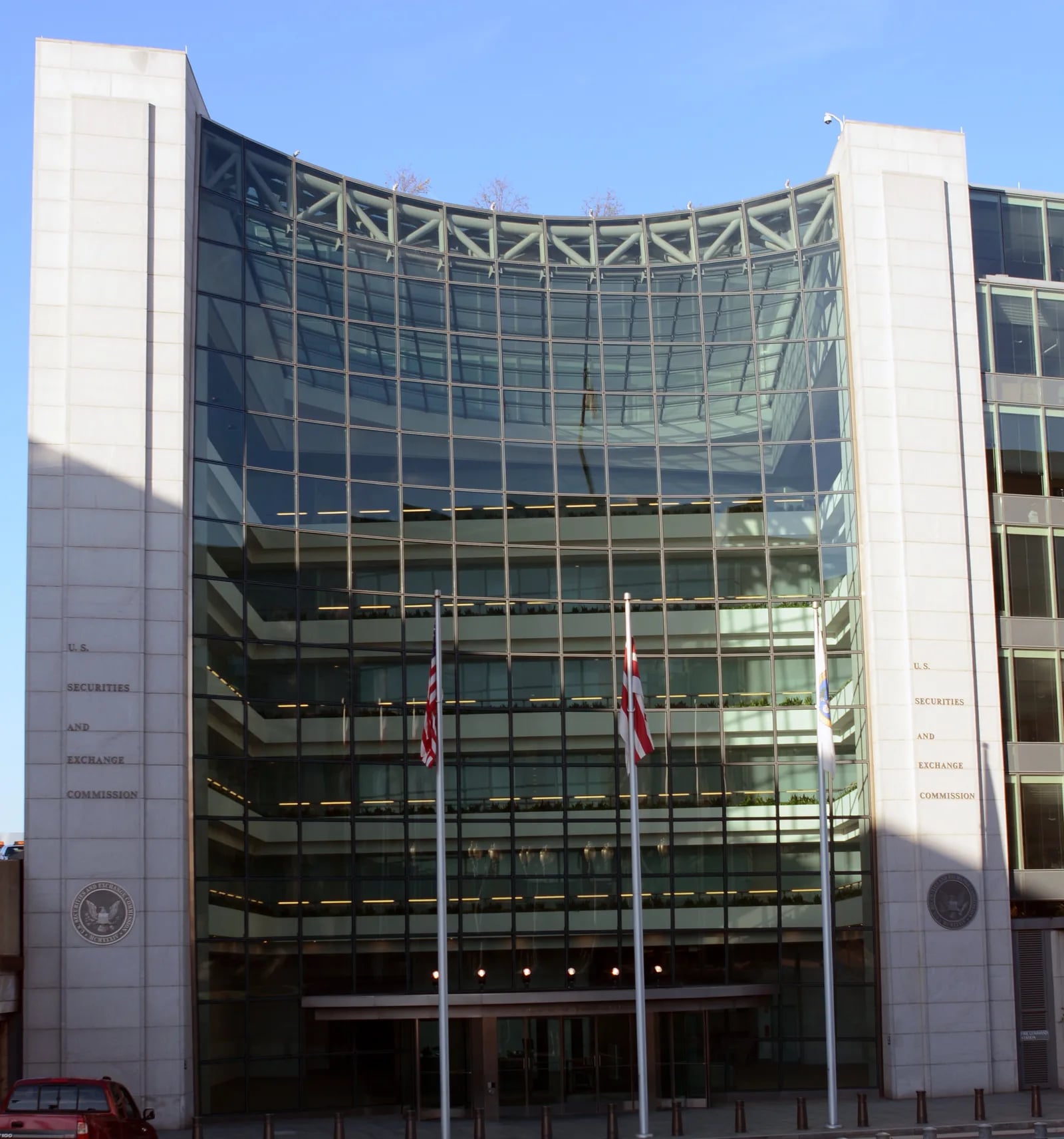
On October 1, 2026, the U.S. Securities and Exchange Commission proposed new custody rules for registered investment advisers and regulated funds, published as Release Nos. IA-7023 and IC-36353 under File No. S7-2026-35. The proposal amends the Investment Advisers Act of 1940 and the Investment Company Act of 1940; CoinDesk reported it runs to 760 pages and opens for a 60-day public comment period. Under the proposed adviser self-custody rule 223-1(b)(7), a registered investment adviser could hold its advisory clients' crypto assets, including those of regulated funds, in self-custody without a qualified custodian, subject to defined conditions. A companion proposed rule, 17f-9 under the Investment Company Act, would let a regulated fund hold crypto through its own adviser when the adviser complies with the self-custody rule and the fund's board oversees the arrangement. Chairman Paul S. Atkins said the proposal gives advisers and funds "a compliant pathway where none existed before" and replaces "the grey of uncertainty created by custody rules crafted for a bygone era."
The self-custody pathway is deliberately narrow. Before taking self-custody, and quarterly thereafter, the adviser must make a written determination that no permitted custodian is available to maintain the crypto asset; an SEC official told CoinDesk this circumstance would likely be unusual, for example for a newly launched token custodians do not yet support. Conditions require documented safeguarding expertise, joint authorization of any crypto transaction by at least two people, and client assets held in addresses storing only that client's crypto. The adviser must review cybersecurity controls at least annually and obtain internal control reports from an independent public accountant within six months of taking self-custody and annually after. Self-custodied clients must receive account statements at least quarterly, and adviser and client must sign an agreement treating each self-custodied asset as a financial asset, with the adviser as securities intermediary under state law. For regulated-fund clients, the board must review the adviser's determination initially and quarterly and decide before the arrangement begins, and annually after, that the fund's crypto would receive reasonable care if self-custodied with the adviser. Commissioner Hester Peirce noted the proposal uses "self-custody" in an asset-management sense, not investors holding their own keys, and said she would have preferred "shelf-custody."
The second pathway covers state trust companies. Under proposed Advisers Act rule 223-1(d)(13)(v) and proposed Investment Company Act rule 17f-8, an adviser or fund could use a state trust company as custodian, provided it has a reasonable basis, after due inquiry, for believing the company is authorized by the relevant state banking authority to provide crypto custody and maintains written safeguarding policies. The adviser or fund must review the trust company's latest annual audited financial statements and internal control report, and client crypto must be segregated from the trust company's own assets. State trust companies are not an enumerated category of permitted custodian today, so advisers and funds have had to analyze case by case whether one qualifies as a bank, a question SEC staff addressed in a no-action letter issued September 30, 2025.