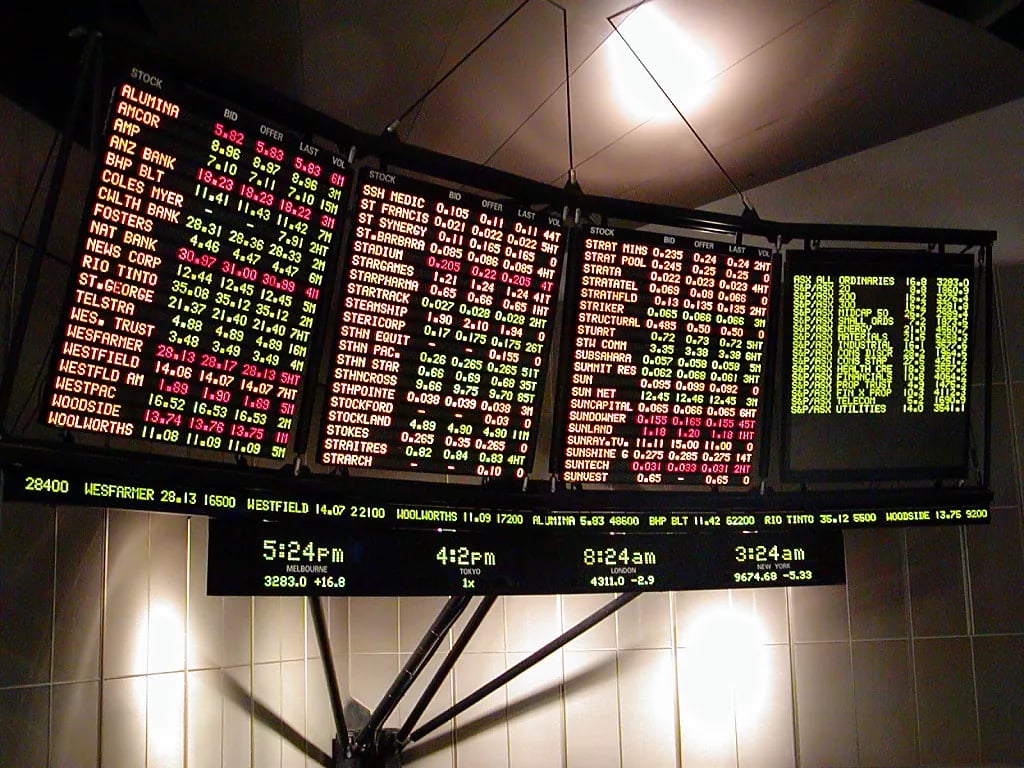
The consortium of Stripe and Advent International has abandoned its pursuit of PayPal Holdings, ending what would have been one of the largest leveraged buyouts in history. PayPal shares plunged as much as 17 percent in premarket trading on Friday, August 28, erasing roughly $8.1 billion in market capitalization in a single session.
The consortium made a formal joint offer at $60.50 per share on July 15, valuing the payments company at more than $53 billion, according to Bloomberg. PayPal's board rejected the bid on July 20, calling it inadequate and signaling it was holding out for a price closer to $70 per share — a level supported by Cantor Fitzgerald's sum-of-the-parts analysis of Venmo, Braintree, branded checkout, and other assets. Extended negotiations followed, but the sweetened offer never materialized. Bloomberg reported Thursday night that the group is no longer pursuing the deal.
PayPal shares closed Thursday at $61.47 and dropped to roughly $52 in premarket trading Friday, according to TechTimes. That single-session decline of approximately $9.47 per share wiped out much of the nearly 30 percent gain the stock had accumulated since Bloomberg first reported Stripe's acquisition interest in mid-July. The $8.1 billion loss in implied market capitalization represents one of the sharpest intraday reactions to a deal collapse in recent fintech history.
The failed transaction would have combined Stripe's developer-focused payment infrastructure with PayPal's 439 million active consumer accounts and Venmo's peer-to-peer network. Together, the two entities would have processed more than $3.5 trillion in annual payment volume, creating a combined payments giant that would have required an estimated 18 to 24 months of antitrust review from the Federal Trade Commission, the Department of Justice, and European regulators, according to TechTimes. Block Inc. had briefly joined the consortium before exiting prior to the formal offer.
Stripe, privately held and valued at $159 billion in a February 2026 employee tender offer, had built its strategic rationale around vertical integration. The company's Bridge stablecoin platform received conditional OCC federal bank approval to operate as a federally chartered national trust bank, and the Open USD consortium it launched on June 30 — backed by Mastercard, Coinbase, Visa, and BlackRock — extended that infrastructure to more than 140 distribution partners, according to TechTimes. What Stripe lacked was a consumer-facing stablecoin distribution network at the scale that PayPal's PYUSD stablecoin and Venmo provided. Without the acquisition, Stripe must build or partner for that consumer layer.
Analysts moved quickly to reset their expectations. Mizuho Securities cut its PayPal price target to $51 from $60 on Friday morning, maintaining a Neutral rating, and identified three specific risks now facing the standalone company: commoditization of its branded checkout button, the risk of losing market share in Germany — where PayPal held a 28.7 percent share of online payments in 2025, per EHI Retail Institute data cited by TechTimes — and competitive pressure on Venmo from X Money, which launched nationwide on July 27 with a 6 percent annual percentage yield savings rate backed by FDIC insurance. Loop Capital simultaneously reduced its target to $50 from $62, also maintaining a Hold rating, according to TechTimes.
The collapse leaves PayPal to execute its standalone turnaround under CEO Enrique Lores, who took over in March 2026 after the company ousted former CEO Alex Chriss. In May, Lores appointed Anshu Bhardwaj as PayPal's chief AI transformation and simplification officer and committed publicly to making PayPal an AI-native payments company, according to TechTimes. The company has targeted $1.5 billion in gross run-rate savings over two to three years, with $400 million expected by year-end 2026. A structural reorganization in April divided PayPal into three units: Checkout Solutions and PayPal, Consumer Financial Services and Venmo, and Payment Services and Crypto.
PayPal's Q2 2026 results had bolstered the board's case for holding out. Non-GAAP earnings per share came in at $1.38, beating Wall Street's $1.28 consensus by nearly 8 percent. Revenue rose 5 percent year over year to $8.68 billion, and total payment volume climbed 10 percent to $486.45 billion. The company also raised its full-year non-GAAP EPS guidance to $53.8. All three figures represented the third consecutive quarterly beat that Cantor Fitzgerald and others had cited as justification for the $70 valuation anchor, according to TechTimes.
At Friday's premarket price of roughly $52, PayPal is trading near or below the revised analyst targets that Mizuho and Loop Capital published that morning — meaning there is minimal consensus upside priced in from standalone fundamentals. Bloomberg described the situation as fluid and noted that Advent and Stripe could theoretically revisit a bid if PayPal's valuation falls far enough. At $52, the original $60.50 offer would represent a premium of roughly 16 percent — still below what a deal requiring 18 to 24 months of antitrust review would typically demand.
The outcome is a stark reminder of the valuation gap that has plagued PayPal since its peak. The company's market capitalization reached approximately $356 billion during the pandemic-driven stock boom in 2021, compared with roughly $52.6 billion at Friday's open. Whether the standalone turnaround under Lores can restore value remains the central question for shareholders who bought on takeover speculation and now face the full weight of competitive pressures without a deal premium as a floor.
Sources
- [TechTimes — Stripe and Advent Drop PayPal Pursuit, Erasing $8 Billion in Market Cap Instantly](https://www.techtimes.com/articles/325925/20260828/stripe-advent-drop-paypal-pursuit-erasing-8-billion-market-cap-instantly.htm)
- [Forbes — PayPal Stock Falls 15% After Buyout Reportedly Falls Through](https://www.forbes.com/sites/fionariley/2026/08/28/paypal-plunges-15-after-reports-that-advent-stripe-abandon-53-billion-bid/)