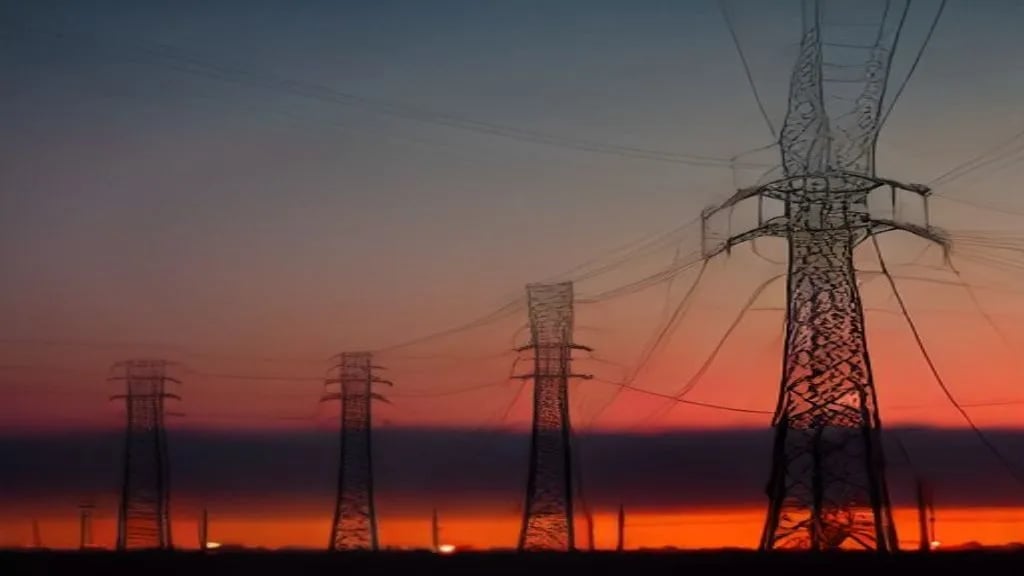
US President Donald Trump signed an executive order on August 26, 2026 declaring a national emergency to protect the American power grid from foreign-produced equipment. The text was published in the Federal Register on August 31 as Executive Order 14421 and targets the bulk-power system: the high-voltage network that moves electricity over long distances, covering transmission lines rated at 69 kilovolts or more, substations and generation facilities, while excluding local distribution networks.
Grounded in the International Emergency Economic Powers Act and the National Emergencies Act, the order states that certain foreign actors are increasingly creating and exploiting vulnerabilities in the US bulk-power system, which supports national defense, vital emergency services, critical infrastructure and the economy. The administration frames it as an "unusual and extraordinary" foreign threat: not a rhetorical formula, but the legal basis allowing the Department of Energy to block commercial transactions with immediate effect.
What the order does
At its core is a prohibition on acquiring, importing, transferring or installing foreign-produced bulk-power system electric equipment when the Department of Energy determines that a transaction involves covered entities, meaning countries under US arms embargo or sanctions regimes or persons Washington deems engaged in conduct detrimental to national security, and poses an undue risk of sabotage, unauthorized access, malicious remote action or supply disruption.
The list of covered equipment is broad: substation transformers, utility-scale grid-connected inverters, battery energy storage systems, generators, protective relaying, high-voltage circuit breakers, generation turbines and industrial control systems such as programmable logic controllers and remote terminal units. The perimeter also includes software, firmware and remote-access capabilities, with attention to vendor update mechanisms across the entire lifecycle of installations.
On timing, the Department of Energy has 120 days to publish implementing rules and identify countries, vendors, products and transactions that warrant restrictions. Within 180 days it must submit recommendations to revise the Federal Acquisition Regulation, the rulebook for federal procurement, in order to prioritize US-manufactured energy infrastructure.
What happens to equipment already installed
The order does not ban all foreign-made equipment. For units already in service before the signing, the Energy Secretary may impose conditions of use, from identification and isolation to monitoring, replacement or removal, weighing grid reliability, the availability of secure replacements and continuity of essential service, with phased compliance possible. A list of pre-qualified vendors and equipment, exempt from the prohibition, is also provided for.
Experts measure the practical scale of the challenge. "Blocking new purchases is the easy part. Knowing what's already running is where the real work starts," John Bruggeman, virtual chief information security officer of CBTS, told Al Jazeera, adding that utilities running foreign-sourced grid equipment have "a live compliance clock starting today." For Michael Centrella of SecurityScorecard, the order "establishes the authority to act," but the difficult next step will be giving operators scalable, independent visibility into which assets and vendor relationships present the greatest risk without disrupting the reliability of the power system.
Why now
In the text, the administration links the emergency to the rapid growth of advanced manufacturing, data centers, artificial intelligence and defense production, which increased America's dependence on abundant, reliable electricity and magnified the consequences of a successful attack. The backdrop is a series of alarms: last year US experts reported undisclosed communication devices in some Chinese solar power inverters, and in July the Federal Communications Commission banned new foreign-made power inverters with remote communication capabilities on the grid.
What about Europe?
The order targets the US market, but it raises the same question across the Atlantic. Europe has already seen what happens when the grid fails: the April 28, 2025 blackout left most of Spain and Portugal without power for hours, prompting Lisbon to announce measures to strengthen its electricity system. The open question is whether European grids are better prepared than the American one against a similar risk, between foreign-supplier dependencies, needed investments and energy prices that remain sensitive to every shock. For now, Washington has chosen the hardest line: treating the power grid as a strategic frontier of national security.
Sources