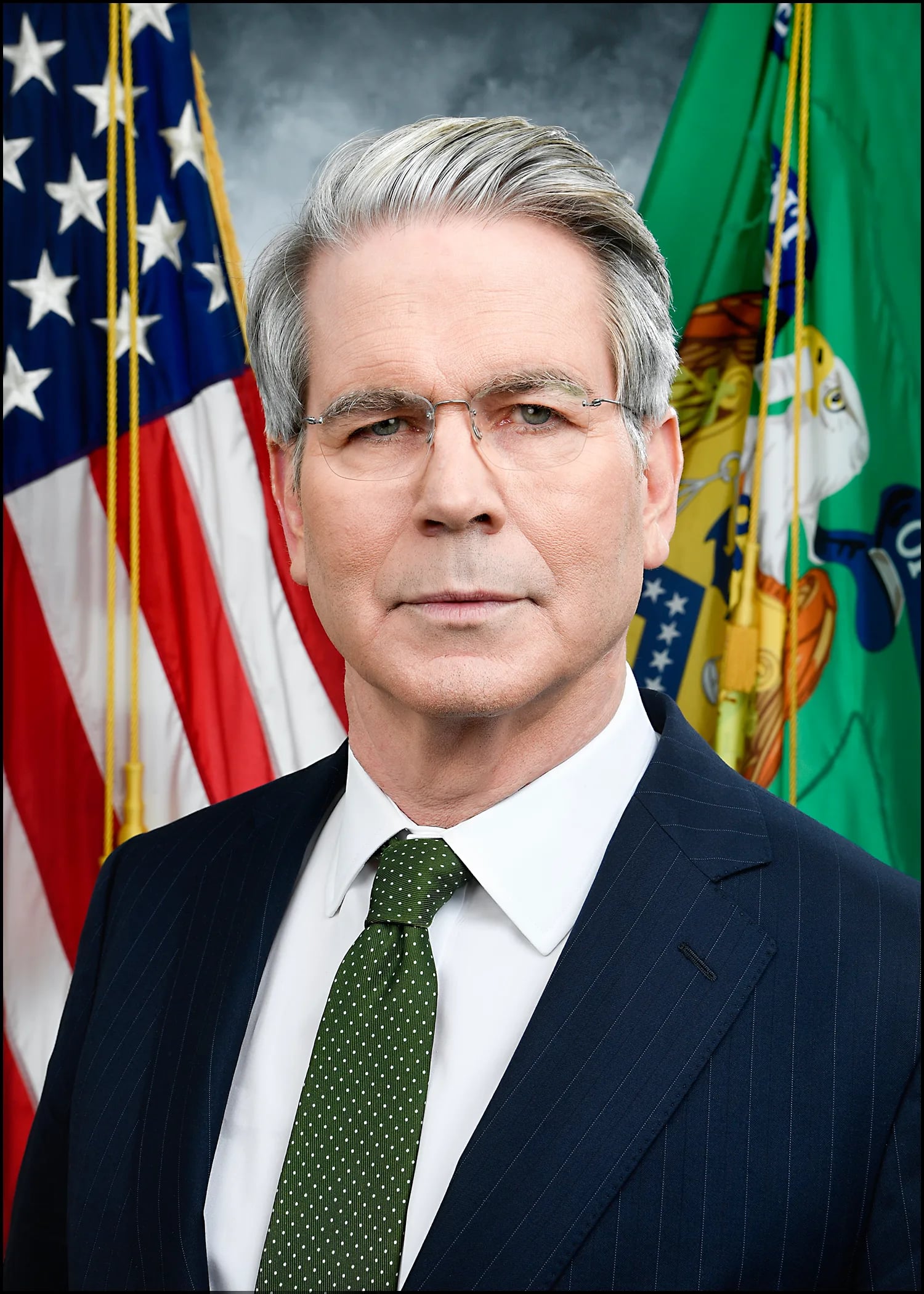
US Treasury Secretary Scott Bessent announced on Monday that all Iranian airlines would be "shut down around the world" from September 23, expanding Washington's economic campaign against Tehran beyond the carriers themselves to target every foreign company that services them.
Speaking to CNBC on September 21, Bessent laid out the scope of the enforcement: "If they land, you cannot provide them with fuel, you cannot provide them with landing services, you cannot sell them tickets, or you will be knocked out of the dollar system." The warning applied to airports, fuel suppliers, ground handlers, and ticketing companies across the globe. It marked the sharpest escalation yet in a series of aviation-related sanctions that began earlier in September, when the Treasury on September 8 designated all 27 remaining Iranian airlines that had not previously been sanctioned, alongside 36 foreign companies accused of supporting Iran's aviation sector.
The secondary sanctions carry significant weight because the United States does not control foreign airspace and cannot physically prevent Iranian aircraft from entering it. Instead, the strategy relies on threatening foreign service providers with exclusion from the dollar-based financial system — the backbone of international commerce — to make it commercially unviable for them to continue handling Iranian flights. It is the same mechanism that has underpinned US sanctions against Russian energy and Chinese semiconductor supply chains in recent years.
The September 23 deadline marked the expiry of a short wind-down period during which foreign governments were expected to stop servicing Iranian carriers. By Wednesday, cancellations had swept across multiple routes. Flights between Iran and Turkey, the UAE, and China — the last major corridors still partially open — were suspended or sharply reduced. Aviation authorities in Oman, Azerbaijan, and Georgia confirmed they would no longer allow Iranian airlines to use their airspace or airport services. In Iraq, Baghdad International Airport was declared off-limits to Iranian carriers, though flights to Najaf continued to operate, according to Al Jazeera reporting on September 23.
The impact on Iran's civilian population is already visible. Iranian travellers are being pushed toward overland routes that are longer, more expensive, and more dangerous. Spare parts for Iran's ageing aircraft fleet, already scarce under years of sanctions, have become even harder to obtain. Mohammadreza Ebrahimpour, an Iran-based aviation and transit expert, told Al Jazeera that Iranian airlines had long relied on third-country intermediaries and smaller firms to obtain fuel and services, and that the new measures represented "a new level" of restriction.
Turkish Airlines has suspended its Iran operations until at least March 2027. Qatar Airways, Emirates, and Lufthansa have also stopped flying to the country. International carriers had already largely avoided Iran since the outbreak of the US-Israel war on Iran in late February, when Tehran responded by blocking the Strait of Hormuz and sending global oil prices sharply higher.
Bessent's announcement came a day after he met with Chinese Vice Premier He Lifeng in New York, ahead of a Trump-Xi summit scheduled for September 25. China and Turkey, two of the three countries — along with the UAE — where Iranian airlines had maintained some operations, have formally rejected US sanctions against Iran, though their more globally connected financial networks have at times distanced themselves from Iranian clients to avoid secondary sanctions exposure.
The Treasury has framed the aviation restrictions as part of "Operation Economic Outcast," aimed at disrupting the use of Iranian commercial aviation for weapons procurement and IRGC-related activities. But the measures are also part of a broader six-month campaign that has expanded secondary sanctions into five new economic sectors — digital assets, gold, shipping, technology, and aviation — in addition to existing restrictions on finance, construction, and manufacturing.
The question now is whether the shutdown will hold. Iran has rejected US sanctions outright, and Tehran retains the option of closing its own airspace to foreign carriers in retaliation. Some analysts have warned that escalating economic pressure risks hardening Iran's position rather than pushing it toward concessions. For the millions of Iranian civilians who depend on commercial aviation for medical travel, family connections, and commerce, the immediate consequence is a further narrowing of options in an already constrained environment.
Sources
- [Al Jazeera — US threatens to ground Iranian airlines worldwide from Wednesday](aljazeera.com) (September 21, 2026)
- [Al Jazeera — US aviation sanctions disrupt Iran flights, push travellers overland](aljazeera.com) (September 23, 2026)
- [Daily Sabah / AFP — US says all Iranian airlines to be shut down Wednesday](dailysabah.com) (September 21, 2026)
- [Economic Times — Bessent threatens secondary sanctions against foreign airports, fuel suppliers](economictimes.indiatimes.com) (September 21, 2026)
- [Aviation Today — US Warns Firms Over Support For Iranian Airlines Ahead Of 23 September Sanctions](aviationtoday.in) (September 22, 2026)