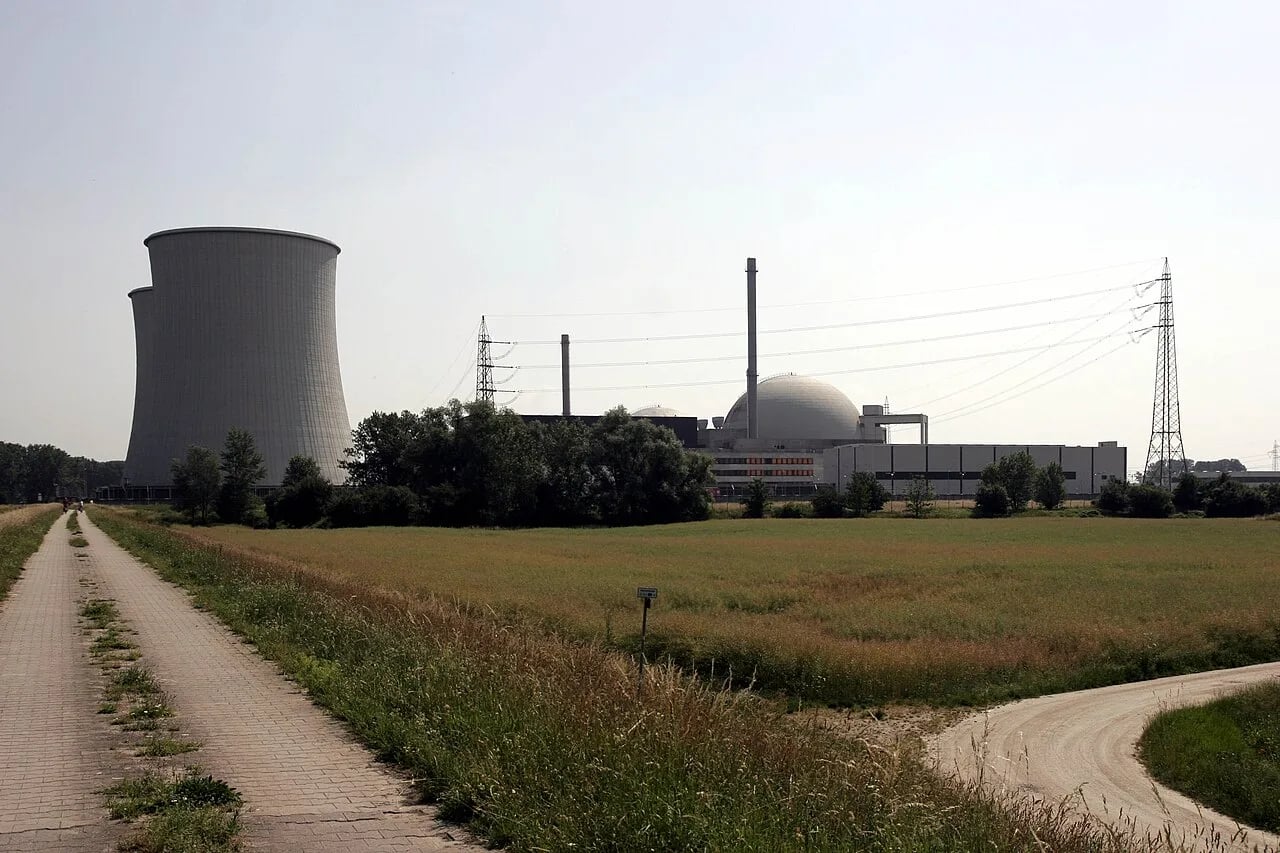
Focused Energy, the German-American company headquartered in Darmstadt that was spun out of the TU Darmstadt ecosystem in 2021, closed a $240 million Series A round on 27 May 2026, equivalent to about 206 million euros. The company calls it the largest fully secured Series A in the history of the global fusion industry, and says the deal made it the most valuable fusion business in Europe: the valuation is close to one billion dollars, according to what the company told Clean Energy Wire. The industrial project those funds must feed sits in Biblis, in the state of Hesse, on the site of the former RWE fission nuclear plant: a laser fusion plant, a different physical process, with no long-lived radioactive waste and no enriched uranium.
Who put up the money
RWE led the round, adding 60 million euros after its first investment in October 2025. For the utility the role is twofold: investor and site owner, making available the existing industrial infrastructure and its experience with regulatory approvals. SPRIND, the federal agency for breakthrough innovation, the European Innovation Council Fund and previous lead investor Prime Movers Lab joined alongside it.
The more unusual detail for an investor is elsewhere. The company said the oversubscribed round drew capital from Germany, Europe, Asia and the Gulf region, including potential buyers of fusion energy willing to finance the entire construction phase through to the final plant. That is not only development-stage venture capital: it is money that could be tied to future electricity supply contracts, the same logic as the power purchase agreements already signed in the sector.
The industrial plan in numbers
The company's roadmap has three steps:
- a first demonstration system, named LightHouse, within five years
- a pilot plant within ten years, with a target output of about 1 GW that the company says matches the consumption of roughly 2 million households
- a commercial plant within fifteen years, so around the middle of the next decade
On direct spending at the site, Focused Energy plans 200 million euros of private capital in Biblis over the next two years and about 500 million by 2030, with stated benefits for regional suppliers, universities and skilled employment. Public money comes on top: on 29 July 2026 the federal research ministry picked Biblis to host the national laser fusion hub, the VEGA project coordinated with Marvel Fusion, the first of the three national hubs under the Fusion 2040 programme. Public funding for the hubs starts with about 125 million euros in the first round and runs in six phases until 2029, while Germany's action plan foresees more than 2 billion euros in total through 2029. The state of Hesse has allocated 20 million euros for fusion research.
The cost gap and the fuel
The distance between the capital raised and the industrial cost of the project remains the most delicate point. The estimate circulating in March 2025, when Focused Energy signed the memorandum with RWE and the state of Hesse, put the Biblis pilot plant at between 5 and 7 billion euros, with later plants expected to be cheaper. The company's cumulative private capital is therefore a fraction of the final bill.
The comparison with the wider sector shows the scale of the problem. The Fusion Industry Association counted $4.48 billion raised in the twelve months to July 2026, up 69 per cent year on year, for a cumulative $14.24 billion since 2021. Yet the companies surveyed estimate an average of $2.7 billion each to reach a commercially viable plant, with a range from $100 million to $10.9 billion.
Academics have formalised the issue. MIT researchers Dennis Whyte and Andrew Lo proposed a test for economic sustainability: the ratio of capital generated to capital spent must exceed 1. As Lo put it, it does not matter whether the plant is small or large, money coming out must exceed money going in.
Two technical constraints dominate. The first is fuel production: tritium has a half-life of 12.3 years and only about 50 kilograms exist worldwide, a stock that must be regenerated inside reactors using technologies never demonstrated at industrial scale. Vice president Ulrich Sigel calls that an engineering challenge rather than a physics problem, but 52 per cent of companies in the sector flag tritium self-sufficiency as a long-term concern. The second is the cost of the electricity produced: critical estimates published in Germany point to at least 20 cents per kilowatt-hour, possibly several times that, while Europe's experimental ITER project has absorbed an estimated 35 to 40 billion euros.
Why fusion became a market story
The architecture chosen at Biblis is inertial confinement with direct drive: fuel capsules, called Pearls, are injected into the chamber and compressed by lasers until they ignite, without the X-ray conversion stage used at the US laboratory. The fuel is deuterium-tritium, derived from sea water and lithium, and it is the only one that has delivered ignition and energy gain in a laboratory. The company insists the game is no longer scientific but industrial: components that can be mass-produced, shipped and made as reliable as in a power plant, backed by one of the few laboratories in the world dedicated to target design. The solid-state lasers planned for the pilot are described as 30 times more efficient than those used at the US lab.
Numbers like these explain why the sector entered institutional portfolios. In 2026 Commonwealth Fusion Systems closed an $863 million round, Helion Energy raised $465 million in June, Proxima Fusion $518 million in July, and TAE Technologies and General Fusion are preparing to list on Nasdaq. Microsoft has a supply deal with Helion dating to 2023 and Google one with Commonwealth since June 2025. Fusion is no longer just a line in public research budgets: it is a sector with valuations, contracts and, soon, stock listings.
The clock is the open question. The stated goal is the first commercial laser fusion plant in the mid-2030s, but the pilot's estimated cost in 2025 stood at 5 to 7 billion euros, more than ten times the private capital the company has raised so far.
Sources