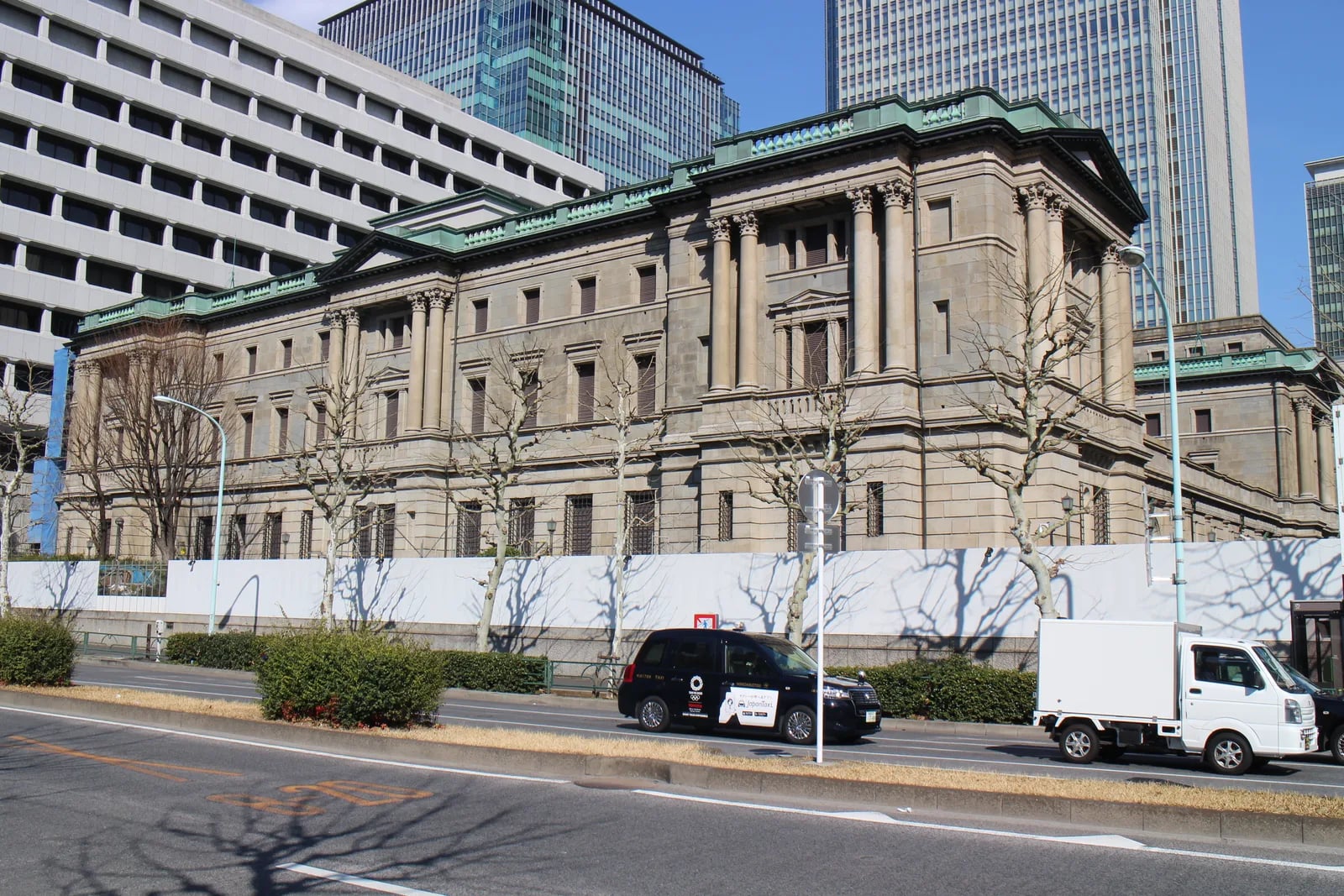
The Bank of Japan published the minutes of its July 30-31 monetary policy meeting on September 28, revealing sharp divisions among board members on how quickly to normalize policy even as inflationary pressures build. The board voted 8-1 at that meeting to hold the benchmark rate at 1.0 percent, but the dissent and internal debate were far more revealing than the headline decision.
Hajime Takata, widely regarded as the board's most hawkish member, proposed raising the rate by 25 basis points to 1.25 percent at the July meeting. His motion was rejected 1-8. In the discussion, Takata argued that the BOJ had "entered a new phase in which it must respond nimbly to changes in overseas financial conditions and discuss the size of increases, as the global environment shifts toward rate hikes." His view — that the central bank should move faster than the cautious pace markets had been pricing — set the tone for much of the internal disagreement.
A majority of board members agreed that the BOJ's policy objective is shifting. Rather than continuing to aim at lifting underlying consumer price inflation to 2 percent, the bank should pivot toward anchoring inflation around that level. This is not a trivial semantic change: it signals that the board increasingly views its inflation target as having been met, and that the policy challenge has moved from stimulus withdrawal to preventing an overshoot. Some members argued the bank's framework should explicitly guard against inflation running above target, not just below it.
Double Shock Warning
The most striking intervention came from a board member who warned that delaying a response to rising prices could force the BOJ into a "double shock" — a scenario in which the central bank is compelled to raise rates sharply after an extended pause, compounding the strain on borrowers already facing elevated costs. The member said the bank needed to "accelerate the pace of adjustment to the degree of monetary accommodation."
Another member said the pace of rate increases could be "faster than the market expects, given that more weight should be placed on upside risks to prices than before." This view contrasts with the market consensus at the time, which was pricing rate increases at roughly six-month intervals.
The minutes also showed Naoki Tamura proposed including in the official outlook the assessment that underlying CPI inflation is "broadly in line with the price stability target" and that medium- to long-term inflation expectations are "likely to be at around 2 percent." Both proposals — Takata's rate hike and Tamura's language change — were rejected at the July meeting.
September Hike and What Comes Next
The BOJ did eventually raise rates by 25 basis points to 1.25 percent at its September 17-18 meeting, in a 7-2 vote. Governor Kazuo Ueda subsequently said the bank plans to continue with rate hikes to stabilize inflation at around 2 percent.
Kazuo Momma, a former BOJ executive director responsible for monetary policy, put the probability of back-to-back rate increases — a move at the October meeting following September's hike — at 20 to 30 percent. Most economists surveyed expect the next move in December or January, but the minutes suggest internal momentum toward a faster pace. Core CPI rose to 2.6 percent in August, and Governor Kazuo Mimura renewed warnings about the economic risks of a persistently weak yen.
The dollar-yen pair traded at 157.44, while 10-year Japanese government bond yields hovered near 3.1 percent — a level not seen since 1996. The yield on US 10-year Treasuries stood at 5.27 percent, the highest since 2007. These yields reflect a global environment in which major central banks are still tightening or holding restrictive policy, making any BOJ delay potentially more costly.
What the Minutes Do Not Settle
The July minutes do not commit the BOJ to a specific timeline for further moves. The rejected proposals show that dissent exists, but the board's majority remains cautious. The September hike and Ueda's subsequent remarks suggest the direction is clear; the question is speed. With the October meeting approaching, markets will parse every signal from board members for clues on whether the hawkish faction can shift the balance.
Sources
- Bank of Japan, "Minutes of the Monetary Policy Meeting on July 30 and 31, 2026" (September 28, 2026)
- Seoul Economic Daily, "BOJ July Minutes Show Hawkish Tilt, Fueling October Hike Talk" (September 29, 2026)
- NHK World-Japan, "Minutes: BOJ discussed faster rate hikes at July meeting" (September 28, 2026)
- Reuters, "Bank of Japan debated need for faster rate hikes, July minutes show" (September 28, 2026)