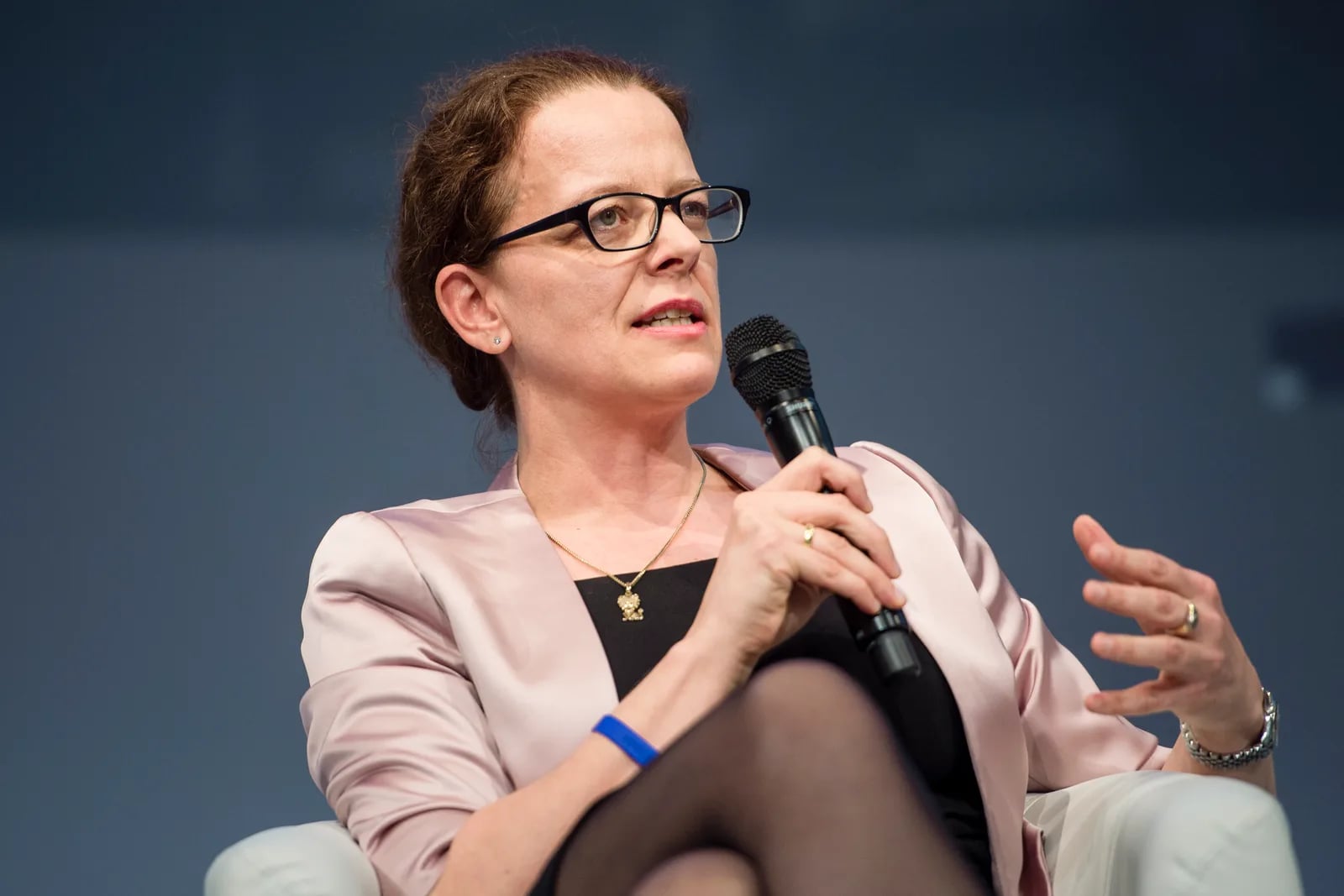
Isabel Schnabel, member of the European Central Bank's Executive Board and the Governing Council, has informed President Christine Lagarde that she will step down from her position on 3 January 2027. The International Monetary Fund announced that Managing Director Kristalina Georgieva intends to appoint Schnabel as the Fund's Financial Counsellor and Director of the Monetary and Capital Markets Department, effective 4 January 2027.
The ECB confirmed in a statement on 24 September that Schnabel will remain in her current role until the transition date and continue exercising her responsibilities. Following an opinion from the ECB's Ethics Committee, the Governing Council determined that no cooling-off period is required, though Schnabel will not be involved in any IMF-related matters for the remainder of her term.
Schnabel, 55, will succeed Tobias Adrian at the IMF's monetary and capital markets department. In a letter to staff seen by Bloomberg News, she described the role as "an opportunity to promote global monetary and financial stability and foster international collaboration at a time when the global economy faces profound transformation."
Her premature exit reshapes the leadership landscape at the Frankfurt-based institution. Schnabel was one of the most hawkish voices on the ECB's Executive Board, firmly backing both interest rate increases since the Iran war erupted and recently characterising the latest energy-price rises as "quite concerning." Her departure removes a key advocate of monetary tightening just as the ECB navigates persistent inflationary pressures.
The timing also intensifies the 2027 succession race. President Lagarde has indicated she will leave the ECB in 2027, though without specifying whether she will see out her term until October. Chief Economist Philip Lane is also expected to depart. European Union leaders may attempt to agree on all three replacements simultaneously, potentially at a summit in December.
France and Germany are seeking to maintain their presence on the Executive Board, while Spain is pushing for a seat after Vice-President Luis de Guindos retired early in 2026. The frontrunners for Lagarde's position include former Dutch central bank chief Klaas Knot and former Spanish central bank chief Pablo Hernandez de Cos, the latter endorsed by his prime minister in a Bloomberg Television interview on 23 September. Germany has never held the ECB presidency, and Bundesbank President Joachim Nagel is interested, though European Commission chief Ursula von der Leyen's presence is seen as a major obstacle.
Schnabel's exit also raises questions about female representation in the ECB's top echelon. With Schnabel departing and a man likely to succeed Lagarde, the gender balance in senior ECB roles will come under scrutiny. Since the ECB was founded in 1999, just one Bundesbank president and one Executive Board member from Germany have completed their terms as scheduled.
The successor to Schnabel on the Executive Board will be appointed by the European Council under the procedure set out in the Treaty on the Functioning of the European Union. Her responsibilities will be temporarily reassigned among the remaining Executive Board members after her departure.
Sources
- European Central Bank, "ECB Executive Board member Isabel Schnabel to resign to take senior role at IMF," 24 September 2026. ecb.europa.eu
- The Straits Times, "Isabel Schnabel to leave ECB board early for senior role at IMF," 25 September 2026. straitstimes.com