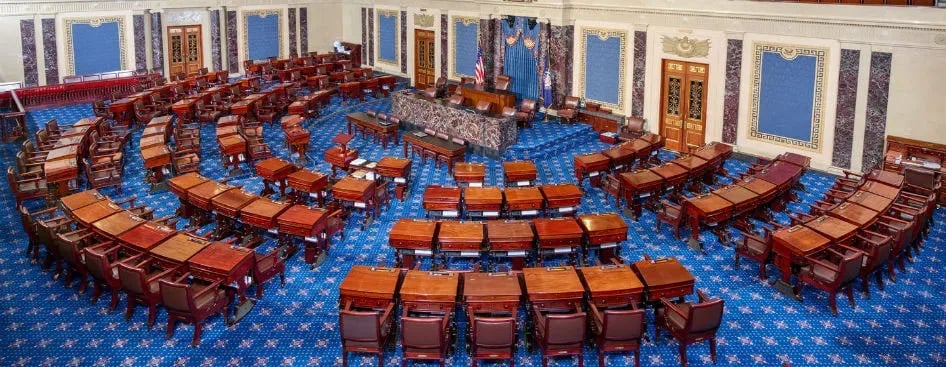
The U.S. House of Representatives on Wednesday passed the Lindsey O. Graham Sanctioning Russia and Iran Act of 2026 (H.R. 5334) by a vote of 262 to 159, sending the legislation to President Donald Trump's desk for signature. The vote caps more than a year and a half of legislative effort, accelerated by the sudden death of Senator Lindsey Graham in July.
The bill, already approved by the Senate on August 8 by an overwhelming 86-11 margin, authorizes the president to impose tariffs of up to 100 percent on the top five purchasers of Russian oil and natural gas — China and India chief among them — or on countries that help Moscow evade sanctions. An exception exists for countries that import less than 15 percent of their natural gas from Russia and are taking "significant" steps to reduce those imports.
The House voted on the final day of session before the midterm election recess. A total of 203 Republicans, 58 Democrats, and one Independent voted in favor; 7 Republicans and 152 Democrats voted against. House Speaker Mike Johnson called the vote "a powerful message of American unity" that "gives the administration every tool in the toolbox to help bring this war to a just end."
Democratic opposition centered on concerns that the bill would dramatically expand presidential tariff powers. Representatives Gregory Meeks of New York, Don Beyer of Virginia, and Richard Neal of Massachusetts said the legislation "would do more harm than good," warning that it expands presidential tariff authority without mandating sanctions on Russia. House Minority Leader Hakeem Jeffries said he could not support the bill because "there are so many loopholes written into the bill" that he doubted whether the sanctions "will ever see the light of day."
On the other side, Republican Representative Michael McCaul of Texas argued that "you can evade sanctions — which the Russians have done for years — but you cannot evade tariffs," calling tariffs "the teeth" of the legislation. The bill grants the president authority to waive sanctions if he certifies to Congress that doing so is in the national interest of the United States.
Beyond tariffs on Russian energy buyers, the bill includes sanctions against Russian President Vladimir Putin, government officials, oligarchs, and Russian financial institutions. At Trump's request, the legislation also extends sanctions on Iran's energy and weapons sectors. The measure marks the first bipartisan congressional legislation supporting Ukraine since the aid package passed in April 2024.
The late Senator Lindsey Graham, a Republican from South Carolina who died in July at age 71, had announced shortly before his passing that he reached a deal with the White House to advance the bill. Senator Darline Graham, Lindsey's sister and appointed to serve out his term, said from the Senate floor that the war against Ukraine is funded primarily by Russian energy revenue and that the law "hits Putin where it hurts."
With the House approval, the bill is now headed to the president's desk. The Trump administration had already signaled in July, in a statement of administration policy, that the president's advisers would recommend he sign it.
Sources